Best drives for the Synology DiskStation DS925+ in Canada
 By Devin Chua · Data checked by Owen Nakamura · Updated · Prices checked
 For the Synology DiskStation DS925+ fit CMR NAS drives like WD Red Pro or Seagate IronWolf Pro across all 4 bays up to 96 TB raw. Since DSM 7.3 (8 October 2025) the DS925+ accepts third-party hard drives and 2.5-inch SATA SSDs for new storage pools; only M.2 NVMe still has to come from Synology's list. At 4 × 8 TB the DS925+ keeps 21.83 TiB usable in SHR, about CA$2,288 in drives. Since its AMD Ryzen V1500B (4 cores, 8 threads) has no integrated GPU, so it cannot hardware-transcode video; it is built for Synology's apps, containers and real virtual machines, an ordinary CMR drive already saturates the DS925+'s link.
As an Amazon Associate we earn from qualifying purchases on Amazon.ca.
Want to know whether the DS925+ fits your actual storage plan? Open the NAS Builder with this model weighted.
CMR NAS drives for the DS925+
Only new SATA drives from families with confirmed CMR recording and a 24/7 rating, in stock on Amazon.ca and within the DS925+’s published limits. SMR drives are kept out. CA$/usable TB assumes all 4 bays filled with equal drives in SHR.
| Model | Capacity | Recording | Price | CA$/raw TB | CA$/usable TB (4 drives, SHR) | |
|---|---|---|---|---|---|---|
 Western Digital 20TB WD Red Pro NAS Internal Hard Drive HDD - 7200 RPM, SATA 6 Gb/s, CMR, 512 MB Cache, 3.5" - WD202KFGXNewbest price per TB CMR, SATA 3.5-inch drive for the DS925+'s bays Amazon.ca · sold by Amazon.ca · one bare internal drive; shipping and taxes not included · checked Oct 15, 2026CA$1,201Buy on Amazon | 20 TB | CMR ✓ | CA$1,201 | CA$60.03/TB | CA$80.04/TB | Buy on Amazon |
 Western Digital 22TB WD Red Pro NAS Internal Hard Drive HDD - 7200 RPM, SATA 6 Gb/s, CMR, 512 MB Cache, 3.5" - WD221KFGXNew CMR, SATA 3.5-inch drive for the DS925+'s bays Amazon.ca · sold by Amazon US · one bare internal drive; shipping and taxes not included · checked Oct 15, 2026 · ships from the US through Amazon.caCA$1,452Buy on Amazon | 22 TB | CMR ✓ | CA$1,452 | CA$66.00/TB | CA$88.00/TB | Buy on Amazon |
 Western Digital 16TB WD Red Pro NAS Internal Hard Drive HDD - 7200 RPM, SATA 6 Gb/s, CMR, 256 MB Cache, 3.5" - WD161KFGXNew CMR, SATA 3.5-inch drive for the DS925+'s bays Amazon.ca · sold by Amazon.ca · one bare internal drive; shipping and taxes not included · checked Oct 15, 2026CA$1,060Buy on Amazon | 16 TB | CMR ✓ | CA$1,060 | CA$66.25/TB | CA$88.33/TB | Buy on Amazon |
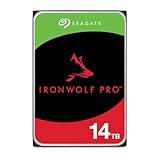 Seagate IronWolf Pro 14TB Enterprise NAS Internal HDD Hard Drive – CMR 3.5 Inch SATA 6Gb/s 7200 RPM 256MB Cache for RAID Network Attached Storage, Rescue Services - FFP (ST14000NTZ01)New CMR, SATA 3.5-inch drive for the DS925+'s bays Amazon.ca · sold by Deals2You · one bare internal drive; shipping and taxes not included · checked Oct 15, 2026CA$930Buy on Amazon | 14 TB | CMR ✓ | CA$930 | CA$66.43/TB | CA$88.57/TB | Buy on Amazon |
 Western Digital 12TB WD Red Pro NAS Internal Hard Drive HDD - 7200 RPM, SATA 6 Gb/s, CMR, 512 MB Cache, 3.5" - WD122KFBXNew CMR, SATA 3.5-inch drive for the DS925+'s bays Amazon.ca · sold by Amazon US · one bare internal drive; shipping and taxes not included · checked Oct 15, 2026 · ships from the US through Amazon.caCA$815Buy on Amazon | 12 TB | CMR ✓ | CA$815 | CA$67.94/TB | CA$90.59/TB | Buy on Amazon |
 Western Digital 4TB WD Red Plus NAS Internal Hard Drive HDD - 5400 RPM, SATA 6 Gb/s, CMR, 128 MB Cache, 3.5" - WD40EFZZNew CMR, SATA 3.5-inch drive for the DS925+'s bays Amazon.ca · sold by Amazon.ca · one bare internal drive; shipping and taxes not included · checked Oct 15, 2026CA$275Buy on Amazon | 4 TB | CMR ✓ | CA$275 | CA$68.75/TB | CA$91.67/TB | Buy on Amazon |
 HD 18TB N300 PRO NAS 3.5 in 7200RPM SATA III TOSHIBA HDWG81JXZSTBNew CMR, SATA 3.5-inch drive for the DS925+'s bays Amazon.ca · sold by Canada Direct - Often Ships Same Day! · one bare internal drive; shipping and taxes not included · checked Oct 15, 2026CA$1,253Buy on Amazon | 18 TB | CMR ✓ | CA$1,253 | CA$69.61/TB | CA$92.81/TB | Buy on Amazon |
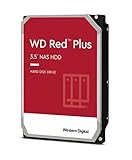 Western Digital 3TB WD Red Plus NAS Internal Hard Drive HDD - 5400 RPM, SATA 6 Gb/s, CMR, 256 MB Cache, 3.5" -WD30EFPXNew CMR, SATA 3.5-inch drive for the DS925+'s bays Amazon.ca · sold by Generic Computer · one bare internal drive; shipping and taxes not included · checked Oct 15, 2026CA$210Buy on Amazon | 3 TB | CMR ✓ | CA$210 | CA$70.00/TB | CA$93.33/TB | Buy on Amazon |
 Seagate IRONWOLF 6TB NAS 3.5IN 6GB/S SATA 256MBNew CMR, SATA 3.5-inch drive for the DS925+'s bays Amazon.ca · sold by Compute4Less Corp · one bare internal drive; shipping and taxes not included · checked Oct 15, 2026CA$423Buy on Amazon | 6 TB | CMR ✓ | CA$423 | CA$70.50/TB | CA$94.00/TB | Buy on Amazon |
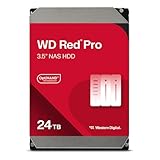 Western Digital 24TB WD Red Pro NAS Internal Hard Drive HDD - 7200 RPM, SATA 6 Gb/s, CMR, 512 MB Cache, 3.5" - WD241KFGXNew CMR, SATA 3.5-inch drive for the DS925+'s bays Amazon.ca · sold by Amazon US · one bare internal drive; shipping and taxes not included · checked Oct 15, 2026 · ships from the US through Amazon.caCA$1,697Buy on Amazon | 24 TB | CMR ✓ | CA$1,697 | CA$70.71/TB | CA$94.28/TB | Buy on Amazon |
 HD 14TB N300 PRO NAS 3.5 in 7200RPM SATA III TOSHIBA HDWG81EXZSTBNew CMR, SATA 3.5-inch drive for the DS925+'s bays Amazon.ca · sold by Canada Direct - Often Ships Same Day! · one bare internal drive; shipping and taxes not included · checked Oct 15, 2026CA$992Buy on Amazon | 14 TB | CMR ✓ | CA$992 | CA$70.87/TB | CA$94.49/TB | Buy on Amazon |
 Toshiba N300 PRO 8TB Large-Sized Business NAS (up to 24 Bays) 3.5-Inch Internal Hard Drive - Up to 300 TB/Year Workload Rate CMR SATA 6 GB/s 7200 RPM 512 MB Cache - HDWG780XZSTBNew CMR, SATA 3.5-inch drive for the DS925+'s bays Amazon.ca · sold by OneDealOutlet Canada · one bare internal drive; shipping and taxes not included · checked Oct 15, 2026CA$572Buy on Amazon | 8 TB | CMR ✓ | CA$572 | CA$71.51/TB | CA$95.35/TB | Buy on Amazon |
What sets the DS925+ apart
The model the whole drive debate revolves around. Since DSM 7.3 you can fit ordinary NAS drives again, and with SHR the DS925+ makes good use of mixed drive sizes. Do not overlook: unlike the DS923+ it has no slot for a 10-gigabit card, but it ships with two 2.5-gigabit ports.
Who the DS925+ is for
The DS925+ runs the AMD Ryzen V1500B (4 cores, 8 threads), and Plex users need one fact first: these embedded Ryzens carry no integrated GPU, so the DS925+ cannot hardware-transcode video. It is built for a different job: Synology's app suite, Docker and genuine virtual machines, backed by 4 to 32 GB of ECC memory. Choose the DS925+ as a dependable ECC all-rounder; for hardware transcoding in this price band, an Intel-based UGREEN or QNAP is the better tool.
How the DS925+'s network shapes the drive choice
The DS925+ runs 2 × 2.5GbE. Two-and-a-half gigabit is about 280 MB/s (almost exactly what a modern high-capacity NAS drive reads off its outer tracks) so the DS925+ sits in the sweet spot where an ordinary CMR drive saturates the link and a Pro model buys nothing on speed. Drives under about 8 TB fall short here for lack of areal density; from 8 TB up, a standard IronWolf or WD Red Plus is the right call on the DS925+.
Drive policy: Since DSM 7.3 (8 October 2025) the DS925+ accepts third-party hard drives and 2.5-inch SATA SSDs for new storage pools; only M.2 NVMe still has to come from Synology's list. The DS925+’s full compatibility rules.
Keep calculating
To see how much capacity is left after parity, the DS925+ capacity calculator is preset to its 4 bays and RAID types. For the DS925+, the wider basics of choosing a drive are in the buying guides, and CMR versus SMR explains why SMR drives do not belong in a RAID array. Wondering what the DS925+ can actually do: Plex, Immich, Docker, VMs? See what the DS925+ can run.
Frequently asked questions
Can I put third-party drives in the DS925+?
Yes. Since DSM 7.3 (8 October 2025) the DS925+ accepts third-party hard drives and 2.5-inch SATA SSDs for new storage pools; only M.2 NVMe still has to come from Synology's list.
Which drives fit the DS925+?
The DS925+ takes any 3.5-inch SATA and 2.5-inch SATA SSD drive; use a CMR NAS family rated for 24/7 duty such as IronWolf, WD Red Plus or Toshiba N300. On its 2 × 2.5GbE, a standard CMR drive is already fast enough for the DS925+.
How much capacity is usable in the DS925+?
In the DS925+, 4 × 8 TB in SHR gives about 21.83 TiB usable and survives 1 drive failing; the balance is parity.
Can the DS925+ run Plex with hardware transcoding?
No hardware transcode. The DS925+'s AMD Ryzen V1500B (4 cores, 8 threads) has no integrated GPU, so Plex must transcode in software: fine for direct play and one light stream, not for multiple 4K streams. For hardware transcoding at this level, an Intel-based NAS with Quick Sync is the better choice.
Is a Pro drive worth it in the DS925+?
Marginal. The DS925+'s 2 × 2.5GbE sits right where a standard CMR drive already saturates the link, so a Pro drive mainly buys warranty, not speed.
Devin Chua works out which drives, RAM and NVMe cache fit which NAS model at nasdrives.ca, and what the RAID choice means for usable capacity, checked against what is in stock on Amazon.ca.
 Data checked by Owen Nakamura, Technical editor (data checking)