How many drives do I need for my NAS?
 By Devin Chua · Data checked by Owen Nakamura · Updated · Prices checked
 For 40 TB usable with 8 TB drives in SHR or RAID 5 you need seven drives (six for data, one for parity). With 12 TB drives it is five, and with 16 TB drives four: fewer bays, less power and a simpler array. Set your target capacity and drive size below and the calculator shows the drive count and the cost to fill in Canadian dollars for every RAID level.
As an Amazon Associate we earn from qualifying purchases on Amazon.ca.
Not sure which NAS and drives to buy? Build a complete NAS recommendation with the capacity, RAID level, drives, UPS and Canadian shopping list worked out together.
Calculated with the cheapest in-stock CMR drive of this size right now: CA$572 (CA$71.51/TB).
In SHR (Synology Hybrid RAID) with single-drive fault tolerance. Gives 36.38 TiB usable.
Drives: from CA$3,432 for 6 × 8 TB (CA$71.51/TB overall)
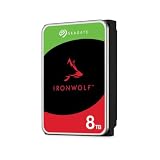
 Toshiba N300 PRO 8TB Large-Sized Business NAS (up to 24 Bays) 3.5-Inch Internal Hard Drive - Up to 300 TB/Year Workload Rate CMR SATA 6 GB/s 7200 RPM 512 MB Cache - HDWG780XZSTBCA$5728 TB · CA$71.51/TBBuy on Amazon


| RAID type | Drives | Usable | Fault tolerance | Cost |
|---|---|---|---|---|
| SHR (Synology Hybrid RAID) | 6 | 36.38 TiB | 1 drive | CA$3,432 |
| RAID 5 (Single parity) | 6 | 36.38 TiB | 1 drive | CA$3,432 |
| RAID 6 (Double parity) | 7 | 36.38 TiB | 2 drives | CA$4,004 |
| SHR-2 (Synology Hybrid RAID, 2-drive) | 7 | 36.38 TiB | 2 drives | CA$4,004 |
| RAID 10 (Mirroring + striping) | 10 | 36.38 TiB | 1 drive | CA$5,721 |
| RAID 1 (Mirroring) RAID 1 mirrors a single drive: with 8 TB drives you reach at most 8 TB usable. | – | – | – | – |
| RAID 0 (Striping) | 5 | 36.38 TiB | none | CA$2,860 |
The cost column multiplies the drive count by the cheapest in-stock CMR offer of that size on Amazon.ca. The NAS itself is not included.
Working backwards from the capacity you want
Most capacity calculators run forwards: you enter drives and get a usable figure. This one runs backwards, which is the way people actually buy. You know you want, say, 40 TB of usable space; the question is how many drives of what size that takes, and what it costs in Canada today. The calculator answers all three at once, for every RAID level side by side.
Fewer large drives beats more small ones
When the cost per terabyte is close, and at mainstream capacities it usually is, the larger drive wins on everything else. Fewer drives means fewer bays to buy, less power drawn every hour of a 24/7 life, and a lower chance that any single drive fails. That is why the live table below is sorted by CA$/TB: find the size where the price per terabyte is keen, then take the fewest drives that hit your target.
The RAID level sets the overhead
Your target is usable capacity, but you buy raw drives, and the gap is the RAID level. SHR and RAID 5 give one drive to parity; RAID 6 and SHR-2 give two; RAID 10 halves the array. The calculator shows the drive count for each, so you can weigh one more drive of safety against the cost. To see exactly what a given set yields, cross-check with the RAID calculator.
Best NAS drives by price per TB in Canada
CMR NAS drives rated for 24/7 use, in stock on Amazon.ca, sorted by CA$/TB: the sizes the calculator prices your array with.
| Model | Capacity | Recording | Price | CA$/raw TB | |
|---|---|---|---|---|---|
 Western Digital 20TB WD Red Pro NAS Internal Hard Drive HDD - 7200 RPM, SATA 6 Gb/s, CMR, 512 MB Cache, 3.5" - WD202KFGXNewbest price per TB CMR recording, SATA NAS drive rated for 24/7 use Amazon.ca · sold by Amazon.ca · one bare internal drive; shipping and taxes not included · checked Oct 15, 2026CA$1,201Buy on Amazon | 20 TB | CMR ✓ | CA$1,201 | CA$60.03/TB | Buy on Amazon |
 Western Digital 22TB WD Red Pro NAS Internal Hard Drive HDD - 7200 RPM, SATA 6 Gb/s, CMR, 512 MB Cache, 3.5" - WD221KFGXNew CMR recording, SATA NAS drive rated for 24/7 use Amazon.ca · sold by Amazon US · one bare internal drive; shipping and taxes not included · checked Oct 15, 2026 · ships from the US through Amazon.caCA$1,452Buy on Amazon | 22 TB | CMR ✓ | CA$1,452 | CA$66.00/TB | Buy on Amazon |
 Western Digital 16TB WD Red Pro NAS Internal Hard Drive HDD - 7200 RPM, SATA 6 Gb/s, CMR, 256 MB Cache, 3.5" - WD161KFGXNew CMR recording, SATA NAS drive rated for 24/7 use Amazon.ca · sold by Amazon.ca · one bare internal drive; shipping and taxes not included · checked Oct 15, 2026CA$1,060Buy on Amazon | 16 TB | CMR ✓ | CA$1,060 | CA$66.25/TB | Buy on Amazon |
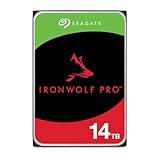 Seagate IronWolf Pro 14TB Enterprise NAS Internal HDD Hard Drive – CMR 3.5 Inch SATA 6Gb/s 7200 RPM 256MB Cache for RAID Network Attached Storage, Rescue Services - FFP (ST14000NTZ01)New CMR recording, SATA NAS drive rated for 24/7 use Amazon.ca · sold by Deals2You · one bare internal drive; shipping and taxes not included · checked Oct 15, 2026CA$930Buy on Amazon | 14 TB | CMR ✓ | CA$930 | CA$66.43/TB | Buy on Amazon |
 Western Digital 12TB WD Red Pro NAS Internal Hard Drive HDD - 7200 RPM, SATA 6 Gb/s, CMR, 512 MB Cache, 3.5" - WD122KFBXNew CMR recording, SATA NAS drive rated for 24/7 use Amazon.ca · sold by Amazon US · one bare internal drive; shipping and taxes not included · checked Oct 15, 2026 · ships from the US through Amazon.caCA$815Buy on Amazon | 12 TB | CMR ✓ | CA$815 | CA$67.94/TB | Buy on Amazon |
 Western Digital 4TB WD Red Plus NAS Internal Hard Drive HDD - 5400 RPM, SATA 6 Gb/s, CMR, 128 MB Cache, 3.5" - WD40EFZZNew CMR recording, SATA NAS drive rated for 24/7 use Amazon.ca · sold by Amazon.ca · one bare internal drive; shipping and taxes not included · checked Oct 15, 2026CA$275Buy on Amazon | 4 TB | CMR ✓ | CA$275 | CA$68.75/TB | Buy on Amazon |
 HD 18TB N300 PRO NAS 3.5 in 7200RPM SATA III TOSHIBA HDWG81JXZSTBNew CMR recording, SATA NAS drive rated for 24/7 use Amazon.ca · sold by Canada Direct - Often Ships Same Day! · one bare internal drive; shipping and taxes not included · checked Oct 15, 2026CA$1,253Buy on Amazon | 18 TB | CMR ✓ | CA$1,253 | CA$69.61/TB | Buy on Amazon |
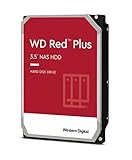 Western Digital 3TB WD Red Plus NAS Internal Hard Drive HDD - 5400 RPM, SATA 6 Gb/s, CMR, 256 MB Cache, 3.5" -WD30EFPXNew CMR recording, SATA NAS drive rated for 24/7 use Amazon.ca · sold by Generic Computer · one bare internal drive; shipping and taxes not included · checked Oct 15, 2026CA$210Buy on Amazon | 3 TB | CMR ✓ | CA$210 | CA$70.00/TB | Buy on Amazon |
 Seagate IRONWOLF 6TB NAS 3.5IN 6GB/S SATA 256MBNew CMR recording, SATA NAS drive rated for 24/7 use Amazon.ca · sold by Compute4Less Corp · one bare internal drive; shipping and taxes not included · checked Oct 15, 2026CA$423Buy on Amazon | 6 TB | CMR ✓ | CA$423 | CA$70.50/TB | Buy on Amazon |
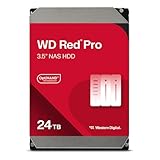 Western Digital 24TB WD Red Pro NAS Internal Hard Drive HDD - 7200 RPM, SATA 6 Gb/s, CMR, 512 MB Cache, 3.5" - WD241KFGXNew CMR recording, SATA NAS drive rated for 24/7 use Amazon.ca · sold by Amazon US · one bare internal drive; shipping and taxes not included · checked Oct 15, 2026 · ships from the US through Amazon.caCA$1,697Buy on Amazon | 24 TB | CMR ✓ | CA$1,697 | CA$70.71/TB | Buy on Amazon |
Frequently asked questions
How many drives do I need for 40 TB usable?
With 8 TB drives in SHR or RAID 5 you need seven drives: six carry the data (48 TB) and one goes to parity, leaving about 40 TB usable after rounding. With 12 TB drives you need five, and with 16 TB drives four. Larger drives mean fewer bays, less power and a simpler array.
Should I buy more small drives or fewer large ones?
Usually fewer, larger drives. They use fewer bays, draw less power over a 24/7 life, and lower the chance that any one drive fails. The cost per terabyte is often similar, so the calculator shows the live CA$/TB for each size: pick the size where the total cost and the bay count both look sensible.
Does the RAID level change how many drives I need?
Yes. RAID 5 and SHR give one drive to parity, so you need your data drives plus one. RAID 6 and SHR-2 give two. RAID 10 needs twice the data drives. The calculator shows the drive count for every level side by side so you can see the trade-off at a glance.
Do I need to account for the TiB difference?
The calculator already does. You enter the usable capacity you want, and it works back through both the RAID overhead and the TB-to-TiB conversion, so the figure it targets is the number your NAS will actually report, not the drive-label number.
Is there a point where more drives stops making sense?
Past about eight bays, a larger drive is usually the better answer: fewer bays, less power and a lower combined failure probability. If your target pushes you well beyond eight drives, re-run the case one drive size up before you commit.
Devin Chua works out which drives, RAM and NVMe cache fit which NAS model at nasdrives.ca, and what the RAID choice means for usable capacity, checked against what is in stock on Amazon.ca.
 Data checked by Owen Nakamura, Technical editor (data checking)