Best SSD for the QNAP TS-264
 By Devin Chua · Data checked by Owen Nakamura · Updated · Prices checked
 The 2 bays of the QNAP TS-264 take 2.5-inch SATA SSDs as well as hard drives. M.2 SATA SSDs are a different part and do not fit a drive bay. Over 2 × 2.5GbE, expandable via the PCIe slot SSDs rarely pay: the network caps throughput long before the drive does, and SSDs cost a multiple per TB. An all-SSD TS-264 makes sense for silence in a living space, or for the many small parallel reads of virtual-machine storage, not for a file-and-backup NAS.
As an Amazon Associate we earn from qualifying purchases on Amazon.ca.
Want to know whether the TS-264 fits your actual storage plan? Open the NAS Builder with this model weighted.
2.5-inch SATA SSDs for the TS-264, from Amazon.ca
| Model | Capacity | Price | |
|---|---|---|---|
 SAMSUNG 870 EVO SATA III SSD 1TB 2.5" Internal Solid State Drive, R/W up to 560/530 MB/s, MZ-77E1T0B/AMNew 2.5-inch SATA SSD for the TS-264's drive bays Amazon.ca · sold by Amazon.ca · one bare SSD; shipping and taxes not included · checked Oct 15, 2026CA$445Buy on Amazon | 1 TB | CA$445 | Buy on Amazon |
 SAMSUNG 870 EVO SATA III SSD 2TB 2.5” Internal Solid State Drive, Upgrade PC or Laptop Memory and Storage for IT Pros, Creators,R/W Speed up to 560/530 MB/s, MZ-77E2T0B/AM [Canada Version]New 2.5-inch SATA SSD for the TS-264's drive bays Amazon.ca · sold by Amazon.ca · one bare SSD; shipping and taxes not included · checked Oct 15, 2026CA$945Buy on Amazon | 2 TB | CA$945 | Buy on Amazon |
 Western Digital 2TB WD Red SA500 NAS 3D NAND Internal SSD Solid State Drive - SATA III 6 Gb/s, 2.5"/7mm, Up to 560 MB/s - WDS200T2R0ANew 2.5-inch SATA SSD for the TS-264's drive bays Amazon.ca · sold by NelsonLife · one bare SSD; shipping and taxes not included · checked Oct 15, 2026CA$1,046Buy on Amazon | 2 TB | CA$1,046 | Buy on Amazon |
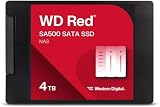 Western Digital 4TB WD Red SA500 NAS 3D NAND Internal SSD Solid State Drive - SATA III 6 Gb/s, 2.5"/7mm, Up to 560 MB/s - WDS400T2R0ANew 2.5-inch SATA SSD for the TS-264's drive bays Amazon.ca · sold by Amazon.ca · one bare SSD; shipping and taxes not included · checked Oct 15, 2026CA$2,000Buy on Amazon | 4 TB | CA$2,000 | Buy on Amazon |
Left out as not fitting the TS-264: 2 listings (M.2 SATA SSD, not a 2.5-inch drive).
When SSDs make sense in the TS-264
A SATA SSD reads about 550 MB/s, a good NAS drive 200 to 280, but the TS-264's 2 × 2.5GbE, expandable via the PCIe slot only carries part of that anyway, and per terabyte the SSD costs several times more. For file storage, backups and media on the TS-264, hard drives are the sensible choice by every measure.
Two cases flip it. Silence: if the TS-264 lives in a living room or bedroom, an all-SSD build is the only thing that truly quiets it. And many small parallel reads (virtual-machine storage, a busy photo database) where the SSD's access times, not its data rate, are what you are buying. On a lighter box like the TS-264, that second case is rarer than it sounds.
Drive policy: QNAP locks no drive brand on the TS-264; its compatibility list is guidance, not a gate. The TS-264’s full compatibility rules.
Keep calculating
To see how much capacity is left after parity, the TS-264 capacity calculator is preset to its 2 bays and RAID types. For the TS-264, the wider basics of choosing a drive are in the buying guides, and CMR versus SMR explains why SMR drives do not belong in a RAID array. Wondering what the TS-264 can actually do: Plex, Immich, Docker, VMs? See what the TS-264 can run.
Frequently asked questions
Which SSDs fit the TS-264's drive bays?
2.5-inch SATA SSDs. M.2 SATA SSDs (WD Red SA500 part numbers ending in R0B, for example) are a different part and do not fit a drive bay, and the TS-264's M.2 slots take NVMe drives.
Can I put third-party drives in the TS-264?
Yes. QNAP locks no drive brand on the TS-264; its compatibility list is guidance, not a gate.
Can the TS-264 run Plex with hardware transcoding?
Yes. The TS-264's Intel Celeron N5095 (4 cores) includes Intel Quick Sync, which hardware-transcodes Plex including 4K HEVC, so it handles several streams at once without loading the CPU.
Devin Chua works out which drives, RAM and NVMe cache fit which NAS model at nasdrives.ca, and what the RAID choice means for usable capacity, checked against what is in stock on Amazon.ca.
 Data checked by Owen Nakamura, Technical editor (data checking)