CMR vs SMR: the one drive spec that breaks a NAS
 By Devin Chua · Reviewed by Claire Bergeron · Updated · Prices checked
 Use CMR drives in a NAS, never SMR. SMR drives write overlapping tracks and must reorganize whole regions on change, so their write speed collapses during a RAID rebuild: turning a repair from hours into days and sometimes failing it outright. Every IronWolf, IronWolf Pro, WD Red Plus, WD Red Pro and Toshiba N300 is CMR. The infamous SMR trap is the plain WD Red (WD20EFAX–WD60EFAX); buy WD Red Plus.
As an Amazon Associate we earn from qualifying purchases on Amazon.ca.
CMR vs SMR, at a glance
| CMR | SMR | |
|---|---|---|
| Tracks | written side by side | overlapping (shingled) |
| Rewrite in place | yes, any block | no: rewrites a whole band |
| RAID rebuild | fast and reliable | collapses; can fail the rebuild |
| Right for | any NAS / RAID array | cold archive, write-once data |
| Found in | IronWolf, Red Plus, N300, Pro, Exos | plain WD Red (WD20–60EFAX) |
The verdict: which should you buy?
What CMR and SMR actually do
CMR (Conventional Magnetic Recording) writes each track side by side, so any block can be rewritten in place. SMR (Shingled Magnetic Recording) overlaps tracks like roof shingles to pack in more data, which means changing one block forces the drive to read and rewrite a whole band. That is fine for a drive written once and read often (cold archive), and a disaster for the random, sustained writes of a RAID rebuild.
Why SMR breaks a rebuild
When a drive fails and you replace it, the NAS reconstructs the missing data by writing the entire new drive: a long, sustained write. On an SMR drive, that write triggers constant band-rewrites, and throughput falls off a cliff: a rebuild that takes hours on CMR can take days on SMR, and the array is unprotected the whole time. Some SMR drives have been reported to drop out of arrays entirely during a rebuild. This is not a theoretical risk; it is the reason the whole industry now labels NAS drives CMR.
How to be sure you buy CMR
- Buy from a NAS line that is documented CMR end-to-end: Seagate IronWolf / IronWolf Pro, WD Red Plus / Red Pro, Toshiba N300, or enterprise Exos / Ultrastar.
- Avoid the plain WD Red (WD20EFAX–WD60EFAX): it is SMR. The 'Plus' is the CMR version.
- If a listing does not state the recording method and the model is not on a known-CMR list, do not use it in a RAID array. Our tables only show families we can confirm are CMR.
Buying in Canada
Canadians cross-shop Amazon.ca, Best Buy Canada, Canada Computers, Newegg.ca and Memory Express; the cheapest SKU moves between them, and we track Amazon.ca live in CAD as the baseline. It is worth a two-minute check across those before you buy a drive or a NAS.
On importing from Amazon.com: it rarely beats a local CAD price once you add exchange, any duty, brokerage and the harder path to a warranty claim or return. The exchange rate is not a penalty: the honest point is total landed cost plus how much easier a return or RMA is when you bought it in Canada. For a drive that will run 24/7 for years, local warranty support is worth real money.
CMR NAS drives on Amazon.ca, by CA$/TB
Only families confirmed CMR, in stock on Amazon.ca, ranked by price per terabyte in CAD.
| Model | Capacity | Recording | Price | CA$/raw TB | |
|---|---|---|---|---|---|
 Western Digital 20TB WD Red Pro NAS Internal Hard Drive HDD - 7200 RPM, SATA 6 Gb/s, CMR, 512 MB Cache, 3.5" - WD202KFGXNewbest price per TB CMR recording, SATA NAS drive rated for 24/7 use Amazon.ca · sold by Amazon.ca · one bare internal drive; shipping and taxes not included · checked Oct 15, 2026CA$1,201Buy on Amazon | 20 TB | CMR ✓ | CA$1,201 | CA$60.03/TB | Buy on Amazon |
 Western Digital 22TB WD Red Pro NAS Internal Hard Drive HDD - 7200 RPM, SATA 6 Gb/s, CMR, 512 MB Cache, 3.5" - WD221KFGXNew CMR recording, SATA NAS drive rated for 24/7 use Amazon.ca · sold by Amazon US · one bare internal drive; shipping and taxes not included · checked Oct 15, 2026 · ships from the US through Amazon.caCA$1,452Buy on Amazon | 22 TB | CMR ✓ | CA$1,452 | CA$66.00/TB | Buy on Amazon |
 Western Digital 16TB WD Red Pro NAS Internal Hard Drive HDD - 7200 RPM, SATA 6 Gb/s, CMR, 256 MB Cache, 3.5" - WD161KFGXNew CMR recording, SATA NAS drive rated for 24/7 use Amazon.ca · sold by Amazon.ca · one bare internal drive; shipping and taxes not included · checked Oct 15, 2026CA$1,060Buy on Amazon | 16 TB | CMR ✓ | CA$1,060 | CA$66.25/TB | Buy on Amazon |
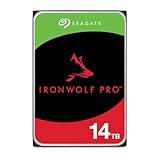 Seagate IronWolf Pro 14TB Enterprise NAS Internal HDD Hard Drive – CMR 3.5 Inch SATA 6Gb/s 7200 RPM 256MB Cache for RAID Network Attached Storage, Rescue Services - FFP (ST14000NTZ01)New CMR recording, SATA NAS drive rated for 24/7 use Amazon.ca · sold by Deals2You · one bare internal drive; shipping and taxes not included · checked Oct 15, 2026CA$930Buy on Amazon | 14 TB | CMR ✓ | CA$930 | CA$66.43/TB | Buy on Amazon |
 Western Digital 12TB WD Red Pro NAS Internal Hard Drive HDD - 7200 RPM, SATA 6 Gb/s, CMR, 512 MB Cache, 3.5" - WD122KFBXNew CMR recording, SATA NAS drive rated for 24/7 use Amazon.ca · sold by Amazon US · one bare internal drive; shipping and taxes not included · checked Oct 15, 2026 · ships from the US through Amazon.caCA$815Buy on Amazon | 12 TB | CMR ✓ | CA$815 | CA$67.94/TB | Buy on Amazon |
 Western Digital 4TB WD Red Plus NAS Internal Hard Drive HDD - 5400 RPM, SATA 6 Gb/s, CMR, 128 MB Cache, 3.5" - WD40EFZZNew CMR recording, SATA NAS drive rated for 24/7 use Amazon.ca · sold by Amazon.ca · one bare internal drive; shipping and taxes not included · checked Oct 15, 2026CA$275Buy on Amazon | 4 TB | CMR ✓ | CA$275 | CA$68.75/TB | Buy on Amazon |
 HD 18TB N300 PRO NAS 3.5 in 7200RPM SATA III TOSHIBA HDWG81JXZSTBNew CMR recording, SATA NAS drive rated for 24/7 use Amazon.ca · sold by Canada Direct - Often Ships Same Day! · one bare internal drive; shipping and taxes not included · checked Oct 15, 2026CA$1,253Buy on Amazon | 18 TB | CMR ✓ | CA$1,253 | CA$69.61/TB | Buy on Amazon |
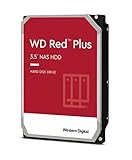 Western Digital 3TB WD Red Plus NAS Internal Hard Drive HDD - 5400 RPM, SATA 6 Gb/s, CMR, 256 MB Cache, 3.5" -WD30EFPXNew CMR recording, SATA NAS drive rated for 24/7 use Amazon.ca · sold by Generic Computer · one bare internal drive; shipping and taxes not included · checked Oct 15, 2026CA$210Buy on Amazon | 3 TB | CMR ✓ | CA$210 | CA$70.00/TB | Buy on Amazon |
 Seagate IRONWOLF 6TB NAS 3.5IN 6GB/S SATA 256MBNew CMR recording, SATA NAS drive rated for 24/7 use Amazon.ca · sold by Compute4Less Corp · one bare internal drive; shipping and taxes not included · checked Oct 15, 2026CA$423Buy on Amazon | 6 TB | CMR ✓ | CA$423 | CA$70.50/TB | Buy on Amazon |
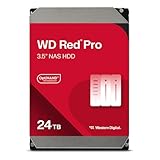 Western Digital 24TB WD Red Pro NAS Internal Hard Drive HDD - 7200 RPM, SATA 6 Gb/s, CMR, 512 MB Cache, 3.5" - WD241KFGXNew CMR recording, SATA NAS drive rated for 24/7 use Amazon.ca · sold by Amazon US · one bare internal drive; shipping and taxes not included · checked Oct 15, 2026 · ships from the US through Amazon.caCA$1,697Buy on Amazon | 24 TB | CMR ✓ | CA$1,697 | CA$70.71/TB | Buy on Amazon |
 HD 14TB N300 PRO NAS 3.5 in 7200RPM SATA III TOSHIBA HDWG81EXZSTBNew CMR recording, SATA NAS drive rated for 24/7 use Amazon.ca · sold by Canada Direct - Often Ships Same Day! · one bare internal drive; shipping and taxes not included · checked Oct 15, 2026CA$992Buy on Amazon | 14 TB | CMR ✓ | CA$992 | CA$70.87/TB | Buy on Amazon |
 Toshiba N300 PRO 8TB Large-Sized Business NAS (up to 24 Bays) 3.5-Inch Internal Hard Drive - Up to 300 TB/Year Workload Rate CMR SATA 6 GB/s 7200 RPM 512 MB Cache - HDWG780XZSTBNew CMR recording, SATA NAS drive rated for 24/7 use Amazon.ca · sold by OneDealOutlet Canada · one bare internal drive; shipping and taxes not included · checked Oct 15, 2026CA$572Buy on Amazon | 8 TB | CMR ✓ | CA$572 | CA$71.51/TB | Buy on Amazon |
Show renewed and used offers (4)
Kept out of the table above: a renewed or used drive has a different warranty and an unknown history, so its price per TB is not comparable with a new drive’s. Each row shows its condition.
| Model | Capacity | Recording | Price | CA$/raw TB | |
|---|---|---|---|---|---|
 Western Digital 18TB WD Red Pro NAS WD181KFGX 7200 RPM SATA 6 Gb/s CMR 256 MB Cache 3.5" Internal Hard Drive HDD (Renewed)Renewed CMR recording, SATA NAS drive rated for 24/7 use Amazon.ca · sold by ServerPartDeals · one bare internal drive; shipping and taxes not included · checked Oct 15, 2026CA$996Buy on Amazon | 18 TB | CMR ✓ | CA$996 | CA$55.32/TB | Buy on Amazon |
 Western Digital 8TB WD Red Pro NAS Internal Hard Drive HDD - 7200 RPM, SATA 6 Gb/s, CMR, 256 MB Cache, 3.5" - WD8003FFBXUsed CMR recording, SATA NAS drive rated for 24/7 use Amazon.ca · sold by Computer Supply · one bare internal drive; shipping and taxes not included · checked Oct 15, 2026CA$511Buy on Amazon | 8 TB | CMR ✓ | CA$511 | CA$63.86/TB | Buy on Amazon |
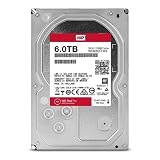 WD Red Pro 6TB 3.5-Inch SATA III 7200rpm 128MB Cache NAS Internal Hard Drive (WD6002FFWX) (Renewed)Renewed CMR recording, SATA NAS drive rated for 24/7 use Amazon.ca · sold by Computer Supply · one bare internal drive; shipping and taxes not included · checked Oct 15, 2026CA$426Buy on Amazon | 6 TB | CMR ✓ | CA$426 | CA$70.96/TB | Buy on Amazon |
 WD Red Pro 6TB NAS Internal Hard Drive - 7200 RPM Class, SATA 6 Gb/s, 256 MB Cache, 3.5" - WD6003FFBX (Renewed)Renewed CMR recording, SATA NAS drive rated for 24/7 use Amazon.ca · sold by Computer Supply · one bare internal drive; shipping and taxes not included · checked Oct 15, 2026CA$426Buy on Amazon | 6 TB | CMR ✓ | CA$426 | CA$70.96/TB | Buy on Amazon |
Common questions
- Is the WD Red 4TB SMR or CMR?
- Can SMR drives be used in RAID?
- How do I tell if my hard drive is SMR or CMR?
Read more
Frequently asked questions
Is CMR or SMR better for a NAS?
CMR, without exception, for any drive in a RAID array. SMR drives collapse during a rebuild because they must rewrite whole track-bands, turning a repair from hours into days. Use CMR NAS drives only.
Which WD Red drives are SMR?
The plain WD Red in the WD20EFAX to WD60EFAX range is SMR. WD Red Plus and WD Red Pro are CMR. On the shelf they look alike, so check for 'Plus' or 'Pro': that is the difference that matters for a NAS.
Is SMR ever okay?
For a cold archive written once and rarely changed, SMR is fine and cheaper. In a NAS with RAID, where a rebuild means sustained writes, it is not: buy CMR.
Devin Chua works out which drives, RAM and NVMe cache fit which NAS model at nasdrives.ca, and what the RAID choice means for usable capacity, checked against what is in stock on Amazon.ca.
 Reviewed by Claire Bergeron, Editor-in-chief