IronWolf vs WD Red: which NAS drive wins?
 By Devin Chua · Reviewed by Claire Bergeron · Updated · Prices checked
 For a home NAS, Seagate IronWolf and WD Red Plus are near-equals (both CMR, 180 TB/yr, 3-year warranty) so the decision comes down to price per TB and one detail: WD's line hides an SMR trap (plain WD Red), while Seagate's IronWolf is CMR across the board. Buy the cheaper of IronWolf or Red Plus in your capacity; go IronWolf Pro or WD Red Pro (7200 rpm, 550 TB/yr, 5-year) for a busy or business NAS. IronWolf Pro adds Rescue data recovery; Red Pro runs a touch cooler.
As an Amazon Associate we earn from qualifying purchases on Amazon.ca.
IronWolf vs WD Red Plus, at a glance
| Seagate IronWolf | WD Red Plus | |
|---|---|---|
| Recording | CMR | CMR (the 'Plus') |
| SMR trap? | None: all IronWolf is CMR | Plain 'WD Red' is SMR: buy Plus |
| Spindle speed | 5400–7200 rpm by capacity | 5400-class (quieter) |
| Workload rating | 180 TB/yr | 180 TB/yr |
| Warranty | 3 years | 3 years |
| Capacities | up to ~12 TB (then Pro) | up to ~14 TB (then Pro) |
| Health tool | IronWolf Health Management | SMART via DSM / OS |
| Noise | slightly higher on 7200 units | typically the quieter drive |
| Price per TB (CAD) | see live table below | see live table below |
Standard (non-Pro) tier. The Pro lines are covered below, both are 7200 rpm, 550 TB/yr, 5-year CMR drives.
The verdict: which should you buy?
The one real difference: WD's SMR trap
On specs the standard drives are twins, both CMR, both 180 TB/yr, both 3-year warranty. The single decision-changing difference is not on either drive; it is in WD's naming. The plain WD Red (WD20EFAX–WD60EFAX) is SMR and must not go in a RAID array, while WD Red Plus is the CMR version. Seagate has no such trap, every IronWolf is CMR. So if you value not having to check a model number, IronWolf has a small edge; if you buy carefully, Red Plus is exactly as safe. Detail in CMR vs SMR.
Noise and speed: a slight nod to Red Plus
For a NAS in a living room or bedroom, noise can be the tiebreaker. WD Red Plus is 5400-class across its range and is usually the quieter, cooler-running drive; IronWolf uses 7200 rpm on its larger capacities, which is marginally louder. On a gigabit or 2.5GbE network neither speed difference matters, a single drive already saturates the link, so unless your NAS is on 10GbE, treat this as a noise decision, not a performance one.
Pro tier: IronWolf Pro vs WD Red Pro
Above the standard drives, and for any busy or business NAS, both makers offer a Pro line, and they are just as evenly matched: 7200 rpm, 550 TB/yr, 5-year warranty, CMR, up to 24 TB and beyond. The differentiators are small: IronWolf Pro includes three years of Seagate Rescue data recovery (a genuine perk for irreplaceable data), while WD Red Pro runs cooler and quieter in some reviews. Decide on price per TB unless the Rescue service tips you to Seagate. Above ~12–14 TB, a Pro (or enterprise) drive is your only option anyway.
The 550 TB/yr correction
Ignore older guides that quote 300 TB/yr for IronWolf Pro: that was an earlier generation. Current IronWolf Pro and WD Red Pro are both rated at 550 TB/yr, about 1.5 TB written every day of the year. A home NAS almost never approaches it, which is precisely why the standard 180 TB/yr drives are enough for most people, and the Pro premium is really about the 5-year warranty and the large capacities, not a workload you will hit.
So, the bottom line
There is no wrong answer between IronWolf and WD Red Plus: they are that close. Let price per TB decide in the capacity you want, using the live table below, and make sure any WD drive says Plus. Reach for the Pro version only if you run a busy multi-user NAS, need a 5-year warranty, or want a capacity the standard lines do not offer. Then size the array with the drive-count calculator.
Buying in Canada
Canadians cross-shop Amazon.ca, Best Buy Canada, Canada Computers, Newegg.ca and Memory Express; the cheapest SKU moves between them, and we track Amazon.ca live in CAD as the baseline. It is worth a two-minute check across those before you buy a drive or a NAS.
On importing from Amazon.com: it rarely beats a local CAD price once you add exchange, any duty, brokerage and the harder path to a warranty claim or return. The exchange rate is not a penalty: the honest point is total landed cost plus how much easier a return or RMA is when you bought it in Canada. For a drive that will run 24/7 for years, local warranty support is worth real money.
IronWolf and WD Red on Amazon.ca, by CA$/TB
CMR NAS drives in stock on Amazon.ca, ranked by price per terabyte in CAD.
| Model | Capacity | Recording | Price | CA$/raw TB | |
|---|---|---|---|---|---|
 Western Digital 20TB WD Red Pro NAS Internal Hard Drive HDD - 7200 RPM, SATA 6 Gb/s, CMR, 512 MB Cache, 3.5" - WD202KFGXNewbest price per TB CMR recording, SATA NAS drive rated for 24/7 use Amazon.ca · sold by Amazon.ca · one bare internal drive; shipping and taxes not included · checked Oct 15, 2026CA$1,201Buy on Amazon | 20 TB | CMR ✓ | CA$1,201 | CA$60.03/TB | Buy on Amazon |
 Western Digital 22TB WD Red Pro NAS Internal Hard Drive HDD - 7200 RPM, SATA 6 Gb/s, CMR, 512 MB Cache, 3.5" - WD221KFGXNew CMR recording, SATA NAS drive rated for 24/7 use Amazon.ca · sold by Amazon US · one bare internal drive; shipping and taxes not included · checked Oct 15, 2026 · ships from the US through Amazon.caCA$1,452Buy on Amazon | 22 TB | CMR ✓ | CA$1,452 | CA$66.00/TB | Buy on Amazon |
 Western Digital 16TB WD Red Pro NAS Internal Hard Drive HDD - 7200 RPM, SATA 6 Gb/s, CMR, 256 MB Cache, 3.5" - WD161KFGXNew CMR recording, SATA NAS drive rated for 24/7 use Amazon.ca · sold by Amazon.ca · one bare internal drive; shipping and taxes not included · checked Oct 15, 2026CA$1,060Buy on Amazon | 16 TB | CMR ✓ | CA$1,060 | CA$66.25/TB | Buy on Amazon |
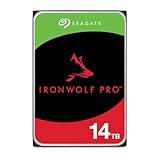 Seagate IronWolf Pro 14TB Enterprise NAS Internal HDD Hard Drive – CMR 3.5 Inch SATA 6Gb/s 7200 RPM 256MB Cache for RAID Network Attached Storage, Rescue Services - FFP (ST14000NTZ01)New CMR recording, SATA NAS drive rated for 24/7 use Amazon.ca · sold by Deals2You · one bare internal drive; shipping and taxes not included · checked Oct 15, 2026CA$930Buy on Amazon | 14 TB | CMR ✓ | CA$930 | CA$66.43/TB | Buy on Amazon |
 Western Digital 12TB WD Red Pro NAS Internal Hard Drive HDD - 7200 RPM, SATA 6 Gb/s, CMR, 512 MB Cache, 3.5" - WD122KFBXNew CMR recording, SATA NAS drive rated for 24/7 use Amazon.ca · sold by Amazon US · one bare internal drive; shipping and taxes not included · checked Oct 15, 2026 · ships from the US through Amazon.caCA$815Buy on Amazon | 12 TB | CMR ✓ | CA$815 | CA$67.94/TB | Buy on Amazon |
 Western Digital 4TB WD Red Plus NAS Internal Hard Drive HDD - 5400 RPM, SATA 6 Gb/s, CMR, 128 MB Cache, 3.5" - WD40EFZZNew CMR recording, SATA NAS drive rated for 24/7 use Amazon.ca · sold by Amazon.ca · one bare internal drive; shipping and taxes not included · checked Oct 15, 2026CA$275Buy on Amazon | 4 TB | CMR ✓ | CA$275 | CA$68.75/TB | Buy on Amazon |
 HD 18TB N300 PRO NAS 3.5 in 7200RPM SATA III TOSHIBA HDWG81JXZSTBNew CMR recording, SATA NAS drive rated for 24/7 use Amazon.ca · sold by Canada Direct - Often Ships Same Day! · one bare internal drive; shipping and taxes not included · checked Oct 15, 2026CA$1,253Buy on Amazon | 18 TB | CMR ✓ | CA$1,253 | CA$69.61/TB | Buy on Amazon |
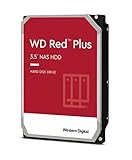 Western Digital 3TB WD Red Plus NAS Internal Hard Drive HDD - 5400 RPM, SATA 6 Gb/s, CMR, 256 MB Cache, 3.5" -WD30EFPXNew CMR recording, SATA NAS drive rated for 24/7 use Amazon.ca · sold by Generic Computer · one bare internal drive; shipping and taxes not included · checked Oct 15, 2026CA$210Buy on Amazon | 3 TB | CMR ✓ | CA$210 | CA$70.00/TB | Buy on Amazon |
 Seagate IRONWOLF 6TB NAS 3.5IN 6GB/S SATA 256MBNew CMR recording, SATA NAS drive rated for 24/7 use Amazon.ca · sold by Compute4Less Corp · one bare internal drive; shipping and taxes not included · checked Oct 15, 2026CA$423Buy on Amazon | 6 TB | CMR ✓ | CA$423 | CA$70.50/TB | Buy on Amazon |
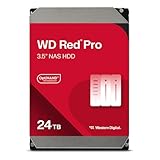 Western Digital 24TB WD Red Pro NAS Internal Hard Drive HDD - 7200 RPM, SATA 6 Gb/s, CMR, 512 MB Cache, 3.5" - WD241KFGXNew CMR recording, SATA NAS drive rated for 24/7 use Amazon.ca · sold by Amazon US · one bare internal drive; shipping and taxes not included · checked Oct 15, 2026 · ships from the US through Amazon.caCA$1,697Buy on Amazon | 24 TB | CMR ✓ | CA$1,697 | CA$70.71/TB | Buy on Amazon |
 HD 14TB N300 PRO NAS 3.5 in 7200RPM SATA III TOSHIBA HDWG81EXZSTBNew CMR recording, SATA NAS drive rated for 24/7 use Amazon.ca · sold by Canada Direct - Often Ships Same Day! · one bare internal drive; shipping and taxes not included · checked Oct 15, 2026CA$992Buy on Amazon | 14 TB | CMR ✓ | CA$992 | CA$70.87/TB | Buy on Amazon |
 Toshiba N300 PRO 8TB Large-Sized Business NAS (up to 24 Bays) 3.5-Inch Internal Hard Drive - Up to 300 TB/Year Workload Rate CMR SATA 6 GB/s 7200 RPM 512 MB Cache - HDWG780XZSTBNew CMR recording, SATA NAS drive rated for 24/7 use Amazon.ca · sold by OneDealOutlet Canada · one bare internal drive; shipping and taxes not included · checked Oct 15, 2026CA$572Buy on Amazon | 8 TB | CMR ✓ | CA$572 | CA$71.51/TB | Buy on Amazon |
Show renewed and used offers (4)
Kept out of the table above: a renewed or used drive has a different warranty and an unknown history, so its price per TB is not comparable with a new drive’s. Each row shows its condition.
| Model | Capacity | Recording | Price | CA$/raw TB | |
|---|---|---|---|---|---|
 Western Digital 18TB WD Red Pro NAS WD181KFGX 7200 RPM SATA 6 Gb/s CMR 256 MB Cache 3.5" Internal Hard Drive HDD (Renewed)Renewed CMR recording, SATA NAS drive rated for 24/7 use Amazon.ca · sold by ServerPartDeals · one bare internal drive; shipping and taxes not included · checked Oct 15, 2026CA$996Buy on Amazon | 18 TB | CMR ✓ | CA$996 | CA$55.32/TB | Buy on Amazon |
 Western Digital 8TB WD Red Pro NAS Internal Hard Drive HDD - 7200 RPM, SATA 6 Gb/s, CMR, 256 MB Cache, 3.5" - WD8003FFBXUsed CMR recording, SATA NAS drive rated for 24/7 use Amazon.ca · sold by Computer Supply · one bare internal drive; shipping and taxes not included · checked Oct 15, 2026CA$511Buy on Amazon | 8 TB | CMR ✓ | CA$511 | CA$63.86/TB | Buy on Amazon |
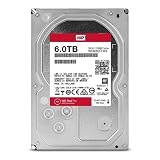 WD Red Pro 6TB 3.5-Inch SATA III 7200rpm 128MB Cache NAS Internal Hard Drive (WD6002FFWX) (Renewed)Renewed CMR recording, SATA NAS drive rated for 24/7 use Amazon.ca · sold by Computer Supply · one bare internal drive; shipping and taxes not included · checked Oct 15, 2026CA$426Buy on Amazon | 6 TB | CMR ✓ | CA$426 | CA$70.96/TB | Buy on Amazon |
 WD Red Pro 6TB NAS Internal Hard Drive - 7200 RPM Class, SATA 6 Gb/s, 256 MB Cache, 3.5" - WD6003FFBX (Renewed)Renewed CMR recording, SATA NAS drive rated for 24/7 use Amazon.ca · sold by Computer Supply · one bare internal drive; shipping and taxes not included · checked Oct 15, 2026CA$426Buy on Amazon | 6 TB | CMR ✓ | CA$426 | CA$70.96/TB | Buy on Amazon |
Read more
Frequently asked questions
IronWolf or WD Red Plus, which is better?
They are near-identical: both CMR, 180 TB/yr, 3-year warranty. Buy whichever is cheaper per TB in Canada. IronWolf's small edges are IronWolf Health Management and that every model is CMR; Red Plus's edge is quieter 5400-class operation. Just make sure any WD drive is Red Plus, not the SMR plain WD Red.
Is IronWolf louder than WD Red Plus?
Slightly, on the larger capacities where IronWolf uses 7200 rpm; WD Red Plus is 5400-class and usually the quieter, cooler drive. For a NAS in a living space that can be the tiebreaker. On the speed side, neither matters below a 10GbE network.
What workload is IronWolf Pro rated for?
550 TB per year, not the 300 TB/yr some older guides still quote, which was an earlier generation. WD Red Pro matches it at 550 TB/yr. Both are far beyond what a home NAS writes.
Does IronWolf Pro or Red Pro include data recovery?
IronWolf Pro includes three years of Seagate Rescue data recovery; WD Red Pro does not include an equivalent by default. It is a real perk for irreplaceable data, though not a substitute for a backup in a second location.
Devin Chua works out which drives, RAM and NVMe cache fit which NAS model at nasdrives.ca, and what the RAID choice means for usable capacity, checked against what is in stock on Amazon.ca.
 Reviewed by Claire Bergeron, Editor-in-chief