What a NAS costs to run in Canada, by province
 By Devin Chua · Data checked by Owen Nakamura · Updated · Prices checked
 A four-bay NAS draws about 40 W, about 350 kWh a year, and what that costs is set mostly by your province: about CA$25 a year in Quebec, CA$44 in Ontario on time-of-use and CA$67 in Nova Scotia, as electricity charges only. Set your province and model below for your own figure; the drives, not the CPU, dominate the draw.
As an Amazon Associate we earn from qualifying purchases on Amazon.ca.
156 kWh/year · 18 W average at the wall
Electricity charge only: 156 kWh × 12.62¢. Delivery, regulatory charges and taxes not included.
The same NAS costs about CA$8.65/year more here than in Quebec (7.065¢/kWh): the cheapest place in Canada to run it.

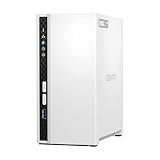


A UPS adds a few percent loss but protects against the far costlier unclean shutdown. Annual figures use your current rate, drive count and active hours.
The maths, and where the watts go
A NAS runs around the clock, so its yearly cost is simply watts × 8,760 hours ÷ 1,000 × your rate. A four-bay N100 build or prebuilt draws roughly 12–15 W without drives; each 3.5-inch NAS drive adds about 4 W at idle and 6 W when active, so four drives bring the box to around 40 W, about350 kWh a year. At Ontario's weighted time-of-use price of 12.62¢/kWh that is about CA$44; the calculator above adds a small cooling and UPS overhead for the draw at the wall.
The important takeaway is where the watts go: spinning drives, not the processor, are the bulk of a NAS’s consumption. That is why the biggest lever on running cost is fewer, larger drives for the same capacity: four 16 TB drives draw far less than eight 8 TB drives. Size that trade with the drive-count calculator and see the per-drive marginal cost in 2-bay vs 4-bay power cost.
The ARM-vs-Intel idle reality
It is tempting to chase a low-power ARM NAS to save on the bill, but the maths tempers it. An ARM box idles a few watts below an Intel one, yet on a multi-bay HDD array the drives dwarf that difference: four spinning drives are ~16 W of idle draw on their own, next to a CPU base of 4–12 W. ARM’s efficiency shows most on a diskless or SSD-only box; on a full hard-drive array, the drive count decides the bill far more than the badge on the chip. See which boxes cost least to run in the by-model electricity table.
The provincial spread
The same NAS can cost twice as much in one province as another. Running it 24/7 makes your rate structure matter: a flat rate is simple, a time-of-use plan rewards a load that already runs overnight, and Alberta’s market rate swings with the season. Pick your province for the details:
Electricity charges by province
The default energy charge per kWh for a NAS’s own power, from each utility’s published rates, with the date it took effect and the date we read it. Delivery, regulatory and fixed charges and taxes are not included. The calculator’s rate field is editable, so you can enter your own; rows marked “check” are due for a re-check or could not be confirmed with the utility, and and should be checked against your utility.
| Province | Energy ¢/kWh | Structure | Source, effective, checked |
|---|---|---|---|
| Quebec | 7.065 (7.065–11.142) | tiered | Hydro-Québec, Rate D · effective 2026-04-01 · checked 2026-10-05 |
| Manitoba | 9.97 | flat | Manitoba Hydro, Residential standard · effective 2026-01-01 · checked 2026-10-05 |
| British Columbia | 11.87 (11.87–14.08) | tiered | BC Hydro, Tiered rate · effective when checked · checked 2026-10-05 |
| Alberta | 12.02 | flat | Direct Energy Regulated Services, Rate of Last Resort · effective 2025-01-01 · checked 2026-10-05 |
| Ontario | 12.62 (12–13.89) | Time-of-use | Ontario Energy Board (Regulated Price Plan), Time-of-use (RPP) · effective 2025-11-01 · checked 2026-10-05 |
| New Brunswick | 13.3 | flat | NB Power, Residential · effective when checked · checked 2026-10-05check |
| Newfoundland & Labrador | 14 | flat | Newfoundland Power, Domestic · effective when checked · checked 2026-10-05check |
| Saskatchewan | 15.476 | flat | SaskPower, Residential standard (E01/E03) · effective 2026-02-01 · checked 2026-10-05 |
| Prince Edward Island | 17.84 (14.23–17.84) | tiered | Maritime Electric, Residential urban (code 110) · effective 2026-08-01 · checked 2026-10-05 |
| Nova Scotia | 19.128 | flat | Nova Scotia Power, Standard residential · effective 2026-05-01 · checked 2026-10-05 |
Cheapest to run: Quebec (7.065¢). Priciest of the populated provinces: Nova Scotia (19.128¢): the same NAS costs meaningfully more there each year.
Cut the bill further
- HDD spin-down savings calculator: the honest numbers
- Is an SSD NAS cheaper to run? (payback maths)
- 2-bay vs 4-bay power cost
- A UPS for your NAS
Frequently asked questions
How much does a NAS cost to run per year in Canada?
A typical four-bay NAS drawing about 40 W uses 350 kWh a year. In electricity charges that is about CA$25 in Quebec (7.065¢/kWh), CA$44 in Ontario on time-of-use (12.62¢ weighted), CA$42 in Alberta on the Rate of Last Resort (12.02¢) and CA$67 in Nova Scotia (19.128¢). Delivery and fixed charges are extra. Your province and drive count decide it; the calculator above works out your figure.
What uses the most power in a NAS: the CPU or the drives?
The drives. A NAS mostly idles, and each 3.5-inch hard drive draws about 4 W idle and 6 W active, so a four-drive box's drives outweigh its low-power CPU. The single biggest lever on running cost is fewer, larger drives for the same capacity.
How is the running cost calculated?
Watts × 8,760 hours ÷ 1,000 × your rate. A NAS runs 24/7, so its average wattage (active hours plus idle hours) times the hours in a year gives annual kWh, and kWh times your ¢/kWh rate gives the dollars. The calculator adds a small cooling and UPS overhead for the real draw at the wall.
Do ARM NAS boxes really use less power than Intel ones?
At idle, somewhat: an ARM box's base draw is a few watts lower than an Intel one. But because drives dominate a multi-bay NAS's consumption, the CPU difference is small next to four spinning drives. ARM saves more on a diskless or SSD-only box than on a full HDD array.
Are the provincial rates in the calculator current?
Each default is the electricity charge from the utility's own published rates, shown with the date it took effect and the date we read it. We re-check each one on its utility's schedule (Ontario every November 1, Quebec and BC every April 1, Alberta when its Rate of Last Resort resets), and the calculator flags any rate that is due for a check or that we could not confirm. The rate field is always editable.
Does spinning down drives save much?
Sometimes, but often less than expected: RAID/ZFS arrays and always-on apps (Plex metadata, Docker, surveillance) frequently prevent real spindown. Our HDD spin-down savings calculator shows both the theoretical maximum and a realistic scenario.
Devin Chua works out which drives, RAM and NVMe cache fit which NAS model at nasdrives.ca, and what the RAID choice means for usable capacity, checked against what is in stock on Amazon.ca.
 Data checked by Owen Nakamura, Technical editor (data checking)