Unraid vs TrueNAS: which should you run?
 By Ryan Fournier · Reviewed by Claire Bergeron · Updated · Prices checked
 Choose Unraid if you want to mix drive sizes and grow one drive at a time, and you value a gentle learning curve: it costs a one-time licence (from roughly CA$65 to CA$170 depending on tier). Choose TrueNAS (free) if you want ZFS's checksums, snapshots and self-healing on matched drives, and you do not mind a steeper start. Both run well on the same N100 or Ryzen hardware.
Unraid vs TrueNAS, at a glance
| Unraid | TrueNAS | |
|---|---|---|
| Mixed drive sizes | no waste: full capacity | sizes a vdev to the smallest |
| Data integrity | ZFS pools optional | ZFS checksums, scrubs, snapshots |
| Grow one drive | anytime, single drive | add a whole vdev |
| Array speed | ~one drive (reads a file) | striped array speed |
| Cost | one-time licence ~CA$65–170 | free, open-source |
| Ease of use | friendly UI, easy Docker/VM | steeper, more technical |
| Best for | mismatched drives, gradual growth | matched drives, integrity, replication |
The verdict: which should you buy?
The core difference: how they use drives
TrueNAS runs ZFS, which stripes across matched drives and sizes a RAID-Z vdev to the smallest member: mixed sizes waste capacity. In return you get end-to-end checksums, scrubs that repair silent corruption, and instant snapshots. It is the choice when data integrity is the priority.
Unraid does not stripe: each data drive holds whole files on its own filesystem, protected by one or two parity drives. Mixed drive sizes cost nothing, and you add a single larger drive whenever you like. The trade is speed (reads come from one drive, not the array) and no ZFS-style checksumming on the array by default (though Unraid now offers ZFS pools too).
Cost, in Canadian dollars
TrueNAS is free and open-source. Unraid is a one-time purchase (tiers by drive count, roughly CA$65 to CA$170 in CAD at current pricing) with no subscription for the base licence. For a build you will grow drive by drive, many Canadians find the Unraid licence pays for itself in the drives it lets them reuse.
Which builder each suits
- Pick Unraid if you have a pile of mismatched drives, plan to grow gradually, want easy Docker/VM management, and prefer a friendly UI.
- Pick TrueNAS if you are buying matched drives, want ZFS integrity and snapshots, run replication to another ZFS box, and are comfortable with a more technical setup.
Both are excellent; there is no wrong answer, only a better fit. Size either with the RAID-Z or Unraid calculator.
As an Amazon Associate we earn from qualifying purchases on Amazon.ca.
NAS drives on Amazon.ca by CA$/TB
Whichever model you choose, it needs CMR NAS drives rated for 24/7 use. These are the current best value per terabyte, live from Amazon.ca in Canadian dollars.
| Model | Capacity | Recording | Price | CA$/raw TB | |
|---|---|---|---|---|---|
 Western Digital 20TB WD Red Pro NAS Internal Hard Drive HDD - 7200 RPM, SATA 6 Gb/s, CMR, 512 MB Cache, 3.5" - WD202KFGXNewbest price per TB CMR recording, SATA NAS drive rated for 24/7 use Amazon.ca · sold by Amazon.ca · one bare internal drive; shipping and taxes not included · checked Oct 15, 2026CA$1,201Buy on Amazon | 20 TB | CMR ✓ | CA$1,201 | CA$60.03/TB | Buy on Amazon |
 Western Digital 22TB WD Red Pro NAS Internal Hard Drive HDD - 7200 RPM, SATA 6 Gb/s, CMR, 512 MB Cache, 3.5" - WD221KFGXNew CMR recording, SATA NAS drive rated for 24/7 use Amazon.ca · sold by Amazon US · one bare internal drive; shipping and taxes not included · checked Oct 15, 2026 · ships from the US through Amazon.caCA$1,452Buy on Amazon | 22 TB | CMR ✓ | CA$1,452 | CA$66.00/TB | Buy on Amazon |
 Western Digital 16TB WD Red Pro NAS Internal Hard Drive HDD - 7200 RPM, SATA 6 Gb/s, CMR, 256 MB Cache, 3.5" - WD161KFGXNew CMR recording, SATA NAS drive rated for 24/7 use Amazon.ca · sold by Amazon.ca · one bare internal drive; shipping and taxes not included · checked Oct 15, 2026CA$1,060Buy on Amazon | 16 TB | CMR ✓ | CA$1,060 | CA$66.25/TB | Buy on Amazon |
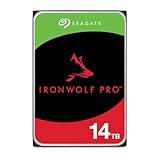 Seagate IronWolf Pro 14TB Enterprise NAS Internal HDD Hard Drive – CMR 3.5 Inch SATA 6Gb/s 7200 RPM 256MB Cache for RAID Network Attached Storage, Rescue Services - FFP (ST14000NTZ01)New CMR recording, SATA NAS drive rated for 24/7 use Amazon.ca · sold by Deals2You · one bare internal drive; shipping and taxes not included · checked Oct 15, 2026CA$930Buy on Amazon | 14 TB | CMR ✓ | CA$930 | CA$66.43/TB | Buy on Amazon |
 Western Digital 12TB WD Red Pro NAS Internal Hard Drive HDD - 7200 RPM, SATA 6 Gb/s, CMR, 512 MB Cache, 3.5" - WD122KFBXNew CMR recording, SATA NAS drive rated for 24/7 use Amazon.ca · sold by Amazon US · one bare internal drive; shipping and taxes not included · checked Oct 15, 2026 · ships from the US through Amazon.caCA$815Buy on Amazon | 12 TB | CMR ✓ | CA$815 | CA$67.94/TB | Buy on Amazon |
 Western Digital 4TB WD Red Plus NAS Internal Hard Drive HDD - 5400 RPM, SATA 6 Gb/s, CMR, 128 MB Cache, 3.5" - WD40EFZZNew CMR recording, SATA NAS drive rated for 24/7 use Amazon.ca · sold by Amazon.ca · one bare internal drive; shipping and taxes not included · checked Oct 15, 2026CA$275Buy on Amazon | 4 TB | CMR ✓ | CA$275 | CA$68.75/TB | Buy on Amazon |
 HD 18TB N300 PRO NAS 3.5 in 7200RPM SATA III TOSHIBA HDWG81JXZSTBNew CMR recording, SATA NAS drive rated for 24/7 use Amazon.ca · sold by Canada Direct - Often Ships Same Day! · one bare internal drive; shipping and taxes not included · checked Oct 15, 2026CA$1,253Buy on Amazon | 18 TB | CMR ✓ | CA$1,253 | CA$69.61/TB | Buy on Amazon |
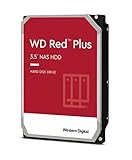 Western Digital 3TB WD Red Plus NAS Internal Hard Drive HDD - 5400 RPM, SATA 6 Gb/s, CMR, 256 MB Cache, 3.5" -WD30EFPXNew CMR recording, SATA NAS drive rated for 24/7 use Amazon.ca · sold by Generic Computer · one bare internal drive; shipping and taxes not included · checked Oct 15, 2026CA$210Buy on Amazon | 3 TB | CMR ✓ | CA$210 | CA$70.00/TB | Buy on Amazon |
 Seagate IRONWOLF 6TB NAS 3.5IN 6GB/S SATA 256MBNew CMR recording, SATA NAS drive rated for 24/7 use Amazon.ca · sold by Compute4Less Corp · one bare internal drive; shipping and taxes not included · checked Oct 15, 2026CA$423Buy on Amazon | 6 TB | CMR ✓ | CA$423 | CA$70.50/TB | Buy on Amazon |
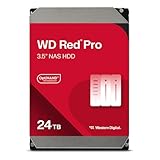 Western Digital 24TB WD Red Pro NAS Internal Hard Drive HDD - 7200 RPM, SATA 6 Gb/s, CMR, 512 MB Cache, 3.5" - WD241KFGXNew CMR recording, SATA NAS drive rated for 24/7 use Amazon.ca · sold by Amazon US · one bare internal drive; shipping and taxes not included · checked Oct 15, 2026 · ships from the US through Amazon.caCA$1,697Buy on Amazon | 24 TB | CMR ✓ | CA$1,697 | CA$70.71/TB | Buy on Amazon |
 HD 14TB N300 PRO NAS 3.5 in 7200RPM SATA III TOSHIBA HDWG81EXZSTBNew CMR recording, SATA NAS drive rated for 24/7 use Amazon.ca · sold by Canada Direct - Often Ships Same Day! · one bare internal drive; shipping and taxes not included · checked Oct 15, 2026CA$992Buy on Amazon | 14 TB | CMR ✓ | CA$992 | CA$70.87/TB | Buy on Amazon |
 Toshiba N300 PRO 8TB Large-Sized Business NAS (up to 24 Bays) 3.5-Inch Internal Hard Drive - Up to 300 TB/Year Workload Rate CMR SATA 6 GB/s 7200 RPM 512 MB Cache - HDWG780XZSTBNew CMR recording, SATA NAS drive rated for 24/7 use Amazon.ca · sold by OneDealOutlet Canada · one bare internal drive; shipping and taxes not included · checked Oct 15, 2026CA$572Buy on Amazon | 8 TB | CMR ✓ | CA$572 | CA$71.51/TB | Buy on Amazon |
Read more
Frequently asked questions
Is Unraid or TrueNAS better for mixed drive sizes?
Unraid, decisively. It gives each data drive its own filesystem, so a stack of different-size drives all contribute their full capacity. TrueNAS/ZFS sizes to the smallest drive in a vdev, wasting the surplus.
Is TrueNAS free and Unraid paid?
Yes. TrueNAS is free and open-source. Unraid is a one-time licence (roughly CA$65–170 in CAD by tier), no subscription for the base licence.
Which is easier for a first NAS?
Unraid, generally: a friendlier UI and simpler drive management. TrueNAS rewards a bit more learning with ZFS's integrity features.
Ryan Fournier covers home-server hardware and efficiency at nasdrives.ca: the right power supply, the UPS, and what a NAS actually draws running around the clock, priced against Canadian hydro rates.
 Reviewed by Claire Bergeron, Editor-in-chief